
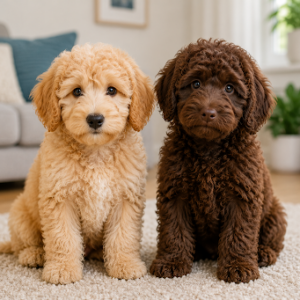
Britain’s miniature doodle market has grown more careful and more demanding, with buyers now asking about health tests, coat genetics, early handling and realistic adult size. Families drawn to mini goldendoodle puppies often want a compact dog with retriever sweetness and poodle cleverness, but small does not mean simple. These puppies still need daily training, regular grooming and calm owners who can shape confidence before cheeky habits take hold. A cute size label won’t do that work for you.
There are roughly 15.5 million pet dogs in the UK right now, and miniature doodles have ended up in everything from city flats to countryside farmhouses. But just because they fit in more homes doesn’t mean they fit any home. Don’t let the small size fool you into skipping the homework.
Anyone searching for mini labradoodle for sale UK should ask what the breeder means by “mini.” Some adults settle around 7 to 10kg, while others reach 15kg or more, depending on the Labrador line, poodle parent, generation and nutrition through puppyhood. A genuine breeder will also describe expected height honestly, rather than hiding behind vague miniature wording. Ask for both parent weights too.
Mini Goldendoodles usually blend Golden Retriever softness with miniature poodle quickness. Many love people, learn rapidly and want to be part of household life. That warmth can become shadowing if the puppy never learns safe alone time.
Buyers comparing miniature goldendoodle puppies for sale UK should look beyond the teddy face. A sound litter shows curiosity, steady recovery after mild surprise and easy handling around ears, feet and muzzle. Parent temperament matters heavily, because a calm mother often teaches more than any sales description ever can. Watch the whole litter.
Mini Labradoodles can feel busier, brighter and more work-hungry, especially when Labrador drive sits close behind the litter. They often enjoy food puzzles, retrieve games, scent work and active owner engagement. Without structure, that same intelligence can spill into barking, jumping or chewing.
Families considering labradoodle miniature puppies should plan short reward-based training from the first week. A young puppy needs toilet rhythm, sleep, name response and gentle lead work before long walks. You can tire a puppy out without ever teaching it how to behave, and you’ll feel that gap the moment guests come round or the lead gets handed to your kids.
The word Australian often confuses new owners. An Australian Labradoodle is usually a developed multi-generation line, rather than a simple Labrador and poodle first cross. Good breeders explain the pedigree, the coat history and the reasons behind the pairing.
An Australian mini labradoodle may offer more predictability in coat, size and temperament, but the label alone proves nothing. Ask for hip and elbow information, eye testing, DNA screening linked to poodle lines and notes on early socialisation. Puppies should meet household noise, gentle visitors, grooming touch and short calm separations.
| Type | Typical Feel | Owner Fit |
| Mini Goldendoodle | Softer, affectionate, people-led | Families wanting warmth with training structure |
| Mini Labradoodle | Bouncy, clever, food-motivated | Active homes that enjoy daily brain work |
| Australian line | Often more predictable | Buyers wanting detailed lineage and records |
Doodle coats come from genetics, not promises. F1 puppies can vary widely, while F1b puppies often show curlier coats and stronger furnishing genes around the face. Those eyebrows and beards look charming, but they collect mud, food and rain.
Searches for small labradoodles puppies for sale often focus on adult size, yet grooming decides daily comfort. British weather can mat a coat quickly, especially behind ears, under armpits, around the beard, across the chest and where a harness rubs. A practical pet trim beats a long photo cut through wet months.
A Mini Goldendoodle may suit a family wanting a softer companion with strong people attachment. A Mini Labradoodle may suit owners who like training games, sniff walks and a dog with busy opinions. Neither choice suits a home that expects an easy ornament. The breeder should ask about your routine, garden access, work pattern and grooming plans.
Choosing mini goldendoodle puppies or a Mini Labradoodle should never come down to size alone. The right puppy fits your routine, grooming tolerance, training style, home noise level and time for daily attention. Health-tested parents, honest coat guidance, early socialisation and steady owner habits give these little doodles the best start. If you’re ready to find your mini doodle, browse our current litters or get in touch with Whosdoodles today to start your application.
The main differences are their temperament, energy levels, and training needs. Mini Goldendoodles are typically affectionate and people-focused, while Mini Labradoodles are often more energetic, intelligent, and enjoy mentally stimulating activities.
Both breeds make excellent family pets, but the right choice depends on your lifestyle. Mini Goldendoodles are ideal for families seeking a gentle, affectionate companion, while Mini Labradoodles are better suited to active households that enjoy regular training and play.
Adult size varies depending on genetics, breeding lines, and generation. Most Mini Goldendoodles and Mini Labradoodles weigh between 7 and 15 kg, so it’s important to ask breeders about the size of both parent dogs.
Yes. Both breeds are highly intelligent and respond well to positive reinforcement. Early socialisation, consistent routines, and reward-based training help them develop into confident and well-behaved family companions.
Yes. Their coats require brushing several times a week, regular ear checks, and professional grooming every few weeks to prevent matting and keep their coats healthy throughout the year.