
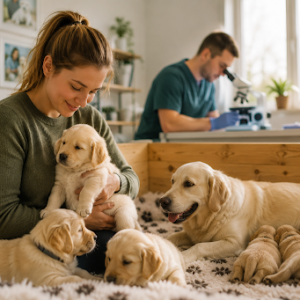
Ethical doodle breeding in the UK now demands more than attractive photos, cheerful adverts and a clean puppy pen. A serious Australian Labradoodle breeder should understand health screening, temperament, coat genetics, early handling and the legal duties that sit behind every litter. Buyers also need sharper eyes, because a puppy can look adorable while still coming from weak planning. Responsible breeding protects the mother, the puppies and the families who will live with those dogs for the next decade.
Ethical breeding starts before mating. The breeder studies both parent dogs, checks health results, considers temperament and avoids pairing dogs just because they produce popular colours. In doodles, this matters because poodle, Labrador and Golden Retriever lines can carry different risks, drives and coat patterns.
Good goldendoodle breeders UK families can trust they will talk openly about hips, elbows, eyes and DNA tests linked to parent breeds. They will not brush off questions or hide behind phrases like family-raised. They will show how puppies sleep, feed, meet household noise and respond to gentle handling.
In England, dog breeding businesses need to meet animal activity licensing standards, and Lucy’s Law means young puppies should come directly from a breeder or rescue, not a third party seller. Law helps, but it does not replace judgement. Some poor sellers still sound polished online.
Families comparing labradoodle puppies breeders should ask to see puppies with their mother, request paperwork before collection day and avoid pressure deposits. A responsible breeder will welcome a careful buyer. They usually ask questions too, because they want to know where the puppy will sleep, how long it will be left and whether the owner understands grooming.
Health testing should guide breeding choices, not decorate a website. A certificate only helps when the breeder understands the result and uses it wisely. Hip and elbow scores, eye screening and DNA tests for relevant poodle and retriever conditions all reduce avoidable risk. They do not promise a perfect dog, but they show that the breeder is taking responsibility.
| Check Area | Why It Matters | What Buyers Should Ask |
| Hips and elbows | Reduces inherited joint risk | Can I see parent results? |
| Eye testing | Helps spot inherited eye disease | When were eyes last checked? |
| DNA screening | Flags known breed linked conditions | Which tests match these parent breeds? |
| Temperament | Shapes family suitability | How do both parents behave at home? |
Doodle coats are not guaranteed by wishful thinking. F1 puppies can range from loose wave to curl, while F1b puppies often carry stronger furnishing genes around the beard and eyebrows. Furnishings can reduce loose hair, but they also raise matting risk.
People searching for dog breeders goldendoodle should listen carefully when coat is discussed. Ethical breeders explain that no doodle is truly maintenance-free. Wet UK walks, harness friction and muddy grass make mats behind ears, under armpits, around the beard and at the tail base. A practical pet trim is often kinder than a long photo style.
Good rearing is quiet, repetitive work. Puppies need safe handling, clean bedding, steady feeding, household sounds and gentle people before they leave. They should learn that brushes, clippers, car noises and short separations are normal. This early work can reduce fear, separation anxiety and frantic behaviour later.
Buyers viewing Australian Labradoodles puppies for sale should ask how the litter has been socialised. Not just loved. Socialised. There is a difference. A breeder who has raised puppies around normal home life can usually describe routines in detail.
Walk away from rushed payment requests, reused photos, hidden addresses, no mother present or excuses about paperwork. Be careful when every puppy is described as rare, perfect or ready today. Ethical breeding has structure. It does not feel like a flash sale.
Choosing an Australian Labradoodle breeder or any doodle breeder should come down to welfare, health evidence, temperament and honesty. A happy puppy starts with tested parents, careful pairing, clean early rearing, realistic coat guidance and owners who continue the work at home. If you’re ready to meet a breeder who puts welfare first, browse our current litters or get in touch with Whosdoodles to start your application today.
Ethical dog breeding focuses on producing healthy, well-socialised puppies through responsible breeding practices. This includes health testing, careful parent selection, early socialisation, and prioritising the welfare of both the dogs and their future families.
A reputable Australian Labradoodle breeder should carry out hip and elbow scoring, eye examinations, and DNA testing for inherited conditions common to Poodles, Labradors, and Golden Retrievers. These tests help reduce the risk of genetic health issues.
Look for breeders who are transparent about health testing, allow you to meet the puppy’s mother, explain their breeding programme, provide contracts and health records, and offer ongoing support after you take your puppy home.
Early socialisation helps puppies become confident, well-adjusted companions by introducing them to everyday sights, sounds, people, grooming, and handling. This reduces the likelihood of fear, anxiety, and behavioural issues later in life.
Common red flags include refusing to show health certificates, rushing deposits, hiding the puppy’s mother, using misleading advertisements, avoiding questions, or promising “perfect” puppies with no maintenance or health concerns.