
The purchase price is not the only figure prospective Goldendoodle owners need to consider. Coat care becomes a recurring expense, and it can surprise people who were told that a low-shedding dog would also be low-maintenance.
For miniature goldendoodles, grooming costs depend on adult size, coat texture, preferred length, where you live and how effectively you maintain the coat between appointments. Building a realistic 12-month budget before getting the dog is far easier than discovering the cost after the first badly matted groom.
A Poodle-cross coat can combine characteristics from both parents rather than following one predictable pattern.
Some dogs develop loose waves. Others have tighter curls or dense coats that trap shed hair close to the skin.
PDSA specifically notes that Poodle crosses such as Labradoodles can require more grooming than owners expect because curly coats are prone to knotting and tangling, particularly when wet. Regular brushing between professional appointments is important.
Goldendoodles can present the same practical problem.
Current 2026 UK booking data puts the average medium-dog full groom at around £55, while curly and wavy coats sit towards the more expensive end of the market. Larger Goldendoodles commonly cost considerably more.
A miniature dog may therefore fall somewhere around the small-to-medium doodle range, but there is no universal tariff.
Location makes a difference as well. London and parts of the South East tend to charge more than many other parts of Britain.
Always ask your chosen salon for a breed- and coat-specific quotation.
Many curly-coated dogs are booked approximately every six to eight weeks, although the right interval depends on coat length and home maintenance.
Across a full year, that roughly means six to nine professional appointments.
At an illustrative £50 to £70 per visit, professional salon care alone could therefore fall around £300 to £630 annually. Owners paying metropolitan prices, requesting longer styles or dealing with difficult coat condition may spend more.
That figure is a planning range, not a fixed national price.
Professional grooming does not replace work at home.
Owners typically need a suitable slicker brush or equivalent coat tool, a metal comb capable of checking down towards the skin, shampoo when appropriate and other basic grooming supplies.
The initial equipment cost is comparatively small beside salon fees, but cheap tools that do not reach through the coat can create false confidence.
A dog may look brushed on top while tight tangles are developing underneath.
Matting makes grooming slower and more difficult.
Areas under the collar or harness, behind the ears, around the legs and wherever the coat experiences friction deserve particular attention.
Once severe matting develops close to the skin, trying to preserve a long fluffy style may no longer be comfortable or realistic.
PDSA advises owners not to tackle significant mats themselves and instead to use a reputable professional groomer.
Some salons charge additional fees for extra time spent dealing with neglected coats.
British weather can make coat maintenance harder.
Mud and moisture create a different challenge from a dog that stays dry between salon visits. A wet curly coat can tangle as it dries, especially if mud or debris remains trapped through longer hair.
After muddy walks, owners may need to rinse, dry and check the coat rather than simply waiting for the next professional appointment.
Keeping the coat shorter can reduce daily maintenance for households that spend lots of time outdoors.
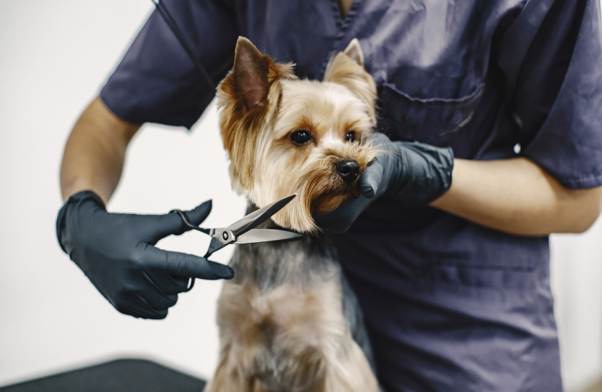
A puppy may not require the same full haircut as an adult immediately, but early grooming experiences matter.
Short introductory appointments can help the dog become comfortable with bathing, dryers, brushes, clippers, feet handling and standing on a grooming table.
PDSA recommends introducing grooming while pets are young and keeping the experience positive.
This may add several smaller appointments during the first year, but it can make later full grooms much easier.
For many owners, professional grooming will account for several hundred pounds per year.
Add the cost of decent home tools, replacement brushes or combs, shampoo and occasional additional salon work, and a planning budget somewhere around £400 to £750 for the year is not unreasonable for a regularly groomed miniature doodle.
Higher-cost areas or longer, more demanding coat styles can push the total beyond that range.
This estimate should sit alongside food, insurance, veterinary care, training and other ownership expenses. PDSA’s general dog-cost estimates specifically exclude professional grooming, meaning owners need to add it separately to their normal annual dog budget.
The appealing coat associated with miniature goldendoodles comes with an ongoing maintenance commitment.
Professional appointments every few weeks are only part of the job. Owners also need to brush effectively at home, manage wet and muddy coats, and recognise tangles before they develop into painful mats.
A realistic 12-month grooming budget is therefore not simply the cost of six haircuts. It includes salon visits, home equipment and enough flexibility for the occasional extra appointment. Planning for those costs from the beginning makes maintaining a comfortable, healthy coat much easier.