
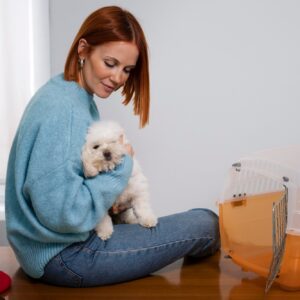
Bringing a Goldendoodle Puppy UK home is exciting, but the first week can feel busy, emotional, and, honestly, a bit messy too. Your puppy is taking in new sounds, new faces, new smells, and a brand new routine, all at once.
Nobody expects perfection in those first few days. What matters most is comfort, patience, and a gentle hand. A calm start helps your puppy feel safe and start trusting this new place as home.
Day one of bringing puppy home works best when kept simple. Too many visitors, loud play, sudden changes – any of that can overwhelm a young puppy fast. Show them the toilet area, the water bowl, where they’ll sleep, and one calm family space. That’s enough for day one.
Let your puppy explore at their own pace. Some bound around like they owned the place. Others stick close to your leg and stay quiet. Both are completely normal. Keep your voice soft, watch the kids closely, and build in plenty of rest between the short bursts of play.
The first night with puppy tends to be the toughest stretch for most families. Your puppy just left their littermates, their familiar smells, everything they knew. Some crying or restlessness should be expected, not feared.
A few things that genuinely help on night one:
A gentle bedtime pattern pays off the more nights you stick with it.
A steady puppy settling routine gives your puppy something to hold onto because they start picking up on what’s coming next. Meals, toilet breaks, naps, bedtime – all of it lands better on a predictable rhythm.
A solid first-week routine might look like this:
Stay flexible with it. Your puppy is still tiny and still learning, so progress shows up in small steps, not giant leaps.
Crate training first week should be about building a safe resting spot, never a punishment corner. Leave the door open at first; let your puppy wander in and check it out on their own terms. Soft bedding, calm praise, the occasional small treat – all of that builds a good association fast.
Short sessions beat long ones every time. Some puppies take to the crate quickly; others need more runway. Either way, avoid leaving your puppy shut in there too long during these early days.
A solid New Puppy Guide always comes back to the basics: toilet breaks, food, and rest. These three things shape the first week far more than any formal training session would.
Daily reminders worth keeping close:
Accidents will happen along the way. Stay calm and just return to the routine.
New puppy adjustment doesn’t happen overnight. Your puppy might trail you everywhere, sleep more than you expected, or seem unsure in rooms they haven’t explored yet. None of that means something’s wrong. They’re simply learning where they fit.
Trust builds through soft voices, brief play sessions, gentle praise, and calm handling. Let family members meet your puppy gradually, not all at once. Hold off on new places and extra visitors during that first week, specifically.
Most Puppy First Week Home moments get easier once you know roughly what’s coming.
Common ones to expect:
Most of this settles down with routine, patience, and a steady hand.
The first week doesn’t need to be perfect, and it won’t be. It just needs to feel gentle, steady, and full of small learning moments along the way. With calm routines and patient, early support, families can help their new puppy settle in with confidence, with Whos Doodles by their side.
Stay calm and check if they need the toilet first. Keep things quiet so bedtime doesn’t turn into playtime.