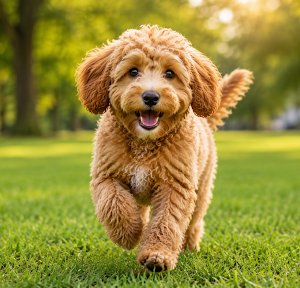
Mini Goldendoodles may be small, but their playful nature and curious minds can keep a household busy. It is easy to assume that a lively puppy simply needs a longer walk. In reality, too much physical activity can leave a growing puppy tired, overstimulated, or uncomfortable. The right routine for Mini Goldendoodle puppies combines age-appropriate movement with play, training, sniffing, mental challenges, and uninterrupted sleep. Learning how to balance these needs can help your puppy remain active without being pushed beyond suitable limits.
What This Blog Covers
This guide explains how to create a balanced activity routine based on your puppy’s age, health, confidence, and daily behavior. It covers:
- How exercise routines need to shift as a puppy grows up a bit.
- Why daily walks should have room for sniffing and quiet exploration time too.
- The importance of safe, supervised playtime for puppies (not just random chaos).
- How mental stimulation really supports an active mind, especially when they seem “too wired.”
- Picking enrichment toys that match their size and curiosity, not the strongest toy you can find.
- Signs that your puppy might be doing too much, like restless pacing, sudden tantrums, or weirdly long naps that come too often, and not the good kind.
Exercise Needs Change as Your Puppy Grows
A young puppy’s routine should build up gradually. Age is only part of the picture i mean, health, energy, confidence, and what your vet says also matter.
- Growing puppies can gradually explore more varied surroundings.
- Adolescent dogs may have more energy but still need structure.
- Adult routines should reflect health, temperament, and lifestyle.
There’s no fixed formula that fits every puppy, so watch how yours responds and adjust from there.
Daily Walks Should Offer More Than Distance
Daily walks are about far more than covering ground. They let a puppy move, sniff, and get used to the world at a calm pace. A slow, sniffy amble can do more good than a brisk march to the end of the road and back.
Check with your vet that your puppy’s vaccinations allow public places first. Once out, it helps to think about:
- Choosing the right surfaces and quieter routes, when you can
- Letting things slow down a bit so there is safe sniffing
- Doing loose-lead walking, practicing as you go
- Not pushing into forced running or those long-distance walks
- Switching your plans when it gets really hot, really cold, or wet out there
Why Puppy Playtime Matters
Good puppy playtime supports coordination, communication, and confidence. Keep it supervised and matched to your puppy’s age.
Gentle tug games, short little retrieves, hide-and-seek, and calm time with suitable dogs are good options too. Try to avoid the repetitive jumping, sharp turns, rough chasing, and that sort of never-ending ball throwing, because it can strain a growing body. It also helps to give your puppy a quick hand at settling, once the excitement fades out.
Mental Exercise Can Be Just as Valuable
Many Mini Goldendoodles enjoy learning and figuring things out, though no two puppies share the same personality or drive. Mental stimulation deserves just as much attention as physical activity, and short training or gentle problem-solving can tire a puppy without much running around.
- Scatter feeding or simple scent searches
- Short reward-based training sessions
- Food puzzles suited to the puppy’s ability
- Finding a hidden toy
- Practicing calm behaviors such as settling on a mat
Choosing Safe Enrichment Toys
Good enrichment toys encourage sniffing, licking, chewing, and problem-solving.
- Supervise new toys; you know, keep an eye on them.
- Check regularly for damage; just look at them now and then.
- Avoid smaller bits that could be swallowed, even in a loose way.
- Start with easy puzzles first before you raise the difficulty level.
- Include any food used in toys inside the daily food allowance too.
- Rotate the activities, instead of giving everything right away.
Signs Your Puppy May Be Doing Too Much
Sensible exercise limits protect a growing puppy from being pushed too far. Watch for:
- Falling behind, or like repeatedly stopping
- Reluctance to keep going walking
- Way too much panting, but it doesn’t really calm down in a normal way
- Stiffness, limping, or that unusual way of moving
- Getting unusually irritable, or overexcited
- Having trouble settling again after activity, or not really winding down
If you notice pain, limping, breathing difficulty, or sudden tiredness, stop the activity and speak to your vet.
Signs Your Mini Goldendoodle Needs More Engagement
Boredom can show up as chewing, attention-seeking, restlessness, barking, or unwanted games. Still, resist assuming every habit means more exercise is needed.
Look instead at the whole routine: sleep, toilet breaks, company, training, and quiet time. If a behavior changes suddenly or proves hard to manage, a qualified reward-based trainer or your vet is a good next step.
Creating a Balanced Daily Routine
Balance matters more than trying to wear a puppy out. A flexible day might include:
- A short age-appropriate walk or outdoor exploration
- Several brief toilet opportunities
- Supervised play
- One or two short training activities
- A sniffing or food-based enrichment activity
- Quiet family time
- Plenty of uninterrupted sleep
This is simply an example to build from, not a schedule to follow to the letter.
Supporting Healthy Activity with WhosDoodles
Getting the routine right means combining suitable movement, mental engagement, and proper rest, then adjusting gradually rather than comparing your puppy with any other dog. At WhosDoodles, we’re a family-run UK breeder, and our puppies grow up with early enrichment, positive experiences, and ongoing support for families long after they go home.
FAQ’s
- Can too much exercise be harmful for a Mini Goldendoodle?
Yes. Excessive running or long walks, especially for puppies, can strain developing joints. Exercise should match your dog’s age and fitness level.
- Does mental stimulation count as exercise for a Mini Goldendoodle?
Absolutely. Puzzle toys, scent games, and obedience training help burn mental energy and can be just as important as physical activity.
- How should exercise routines change during hot or cold weather?
Exercise during cooler hours in summer and shorten outdoor sessions during extreme cold. Always watch for signs of overheating or discomfort.
- What are signs that my Mini Goldendoodle isn’t getting enough exercise?
Common signs include excessive barking, chewing furniture, restlessness, digging, or frequent zoomies indoors due to pent-up energy.
- Are walks enough, or does my Mini Goldendoodle need other activities?
Daily walks are important, but combining them with fetch, agility games, social play, and training sessions provides more balanced physical and mental enrichment.